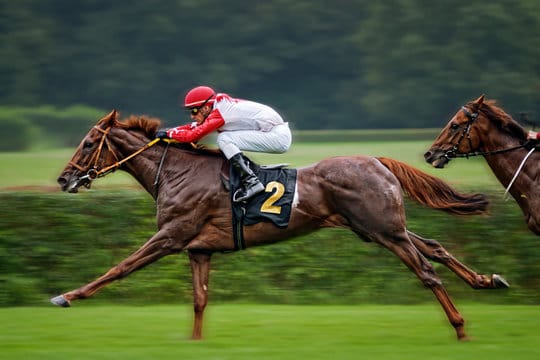
The Impact of a Horse's Mental Concentration on Horse Racing Outcomes

The outcome of a horse race is often attributed to a combination of factors, including physical conditioning, genetics, jockey skill, and track conditions. However, one aspect that remains an underexplored yet crucial element in determining performance is a horse’s mental concentration. While speed and endurance play defining roles, the psychological state of a horse can be just as influential in shaping the final results. A horse that is highly focused and engaged during a race has a distinct advantage over one that is easily distracted or overwhelmed by external stimuli. Understanding how a horse’s mental concentration affects its performance requires an analysis of how training, environment, and neurological factors contribute to its ability to maintain focus in high-stress racing conditions. Betting tips based on a horse’s mental focus can provide valuable insights for those looking to make informed wagers.
Mental concentration in horses is closely tied to their ability to remain calm under pressure. Horses are prey animals with a strong flight response, meaning they are naturally alert to their surroundings. While this heightened awareness serves them well in the wild, it can be a disadvantage in a competitive setting if not properly managed. A horse that becomes anxious or reactive to noises, crowd movements, or other horses may lose its ability to perform at optimal levels. The ability to filter out unnecessary distractions and focus on the race is a skill that must be developed through training and exposure to race-like conditions. Horses that have undergone consistent mental conditioning tend to show greater resilience in high-pressure scenarios, leading to more predictable and controlled performances.
The role of training in improving a horse’s concentration is immense. Just as an athlete practices mental discipline to enhance performance, racehorses undergo extensive training regimens designed to strengthen their focus. A structured routine that includes exposure to starting gates, noise simulation, and pace control helps horses develop the ability to concentrate on the race rather than external stimuli. Trainers often employ desensitization techniques, introducing horses to elements they will encounter on the track so they become less reactive over time. The goal is to condition them to associate the racetrack environment with a state of calm readiness rather than anxiety. By ensuring that a horse remains engaged during both training and competition, trainers can significantly influence its ability to sustain focus when it matters most.
Jockeys also play a pivotal role in maintaining a horse’s concentration throughout a race. Communication between horse and rider goes beyond physical cues; it extends to emotional and psychological synchronization. A skilled jockey understands how to keep a horse mentally engaged, using subtle rein adjustments, voice commands, and body movements to maintain rhythm and prevent loss of focus. The connection between horse and rider can dictate how well a horse responds to shifts in pace, obstacles on the track, or competition from other horses. A rider who can sense when a horse is becoming distracted can employ techniques to redirect its attention and keep it in a competitive mindset. The importance of this bond cannot be overstated, as it is often the difference between a well-executed performance and one marred by loss of concentration.
Environmental factors also play a significant role in shaping a horse’s ability to focus. Race-day conditions, including crowd noise, weather variations, and unfamiliar track surfaces, can influence a horse’s state of mind. Some horses are naturally more adaptable, while others may struggle to adjust to new environments. The impact of external stimuli varies from horse to horse, and those that are trained to handle unpredictable conditions tend to maintain better focus during races. Travel to different tracks can also disrupt a horse’s routine, making it essential for trainers to expose them to varying conditions to enhance their adaptability. Horses that perform consistently well across different settings often possess a higher level of mental fortitude, allowing them to maintain concentration regardless of external distractions.
The neurological aspect of focus in racehorses is a field that continues to be explored. Studies suggest that some horses are naturally predisposed to better concentration due to genetic factors or neurological wiring. Just as some humans are more adept at sustaining focus under stress, certain horses exhibit a greater ability to remain engaged in the task at hand. The prefrontal cortex, which plays a role in decision-making and impulse control, may influence a horse’s ability to stay on task during a race. Additionally, levels of neurotransmitters such as dopamine and serotonin may affect a horse’s emotional regulation and focus. Advances in equine neuroscience may eventually allow for a more scientific approach to identifying and training horses that show superior mental concentration.
Mental fatigue is another critical factor that influences concentration levels. Just as physical exhaustion affects performance, mental fatigue can cause a horse to lose focus, leading to errors in judgment or a decline in racing efficiency. Horses that are overworked or subjected to repetitive training without variation may experience mental burnout, reducing their ability to concentrate when needed. This is why many trainers incorporate mental stimulation into training programs, ensuring that horses remain engaged and motivated. Providing periods of rest, incorporating new challenges, and using positive reinforcement techniques can help sustain a horse’s mental sharpness over time.
Stress management is a key component in enhancing a horse’s ability to concentrate. Horses that experience high levels of stress before or during a race are more likely to be reactive and lose focus. Managing pre-race anxiety through relaxation techniques, consistent routines, and gradual exposure to stressful scenarios can help horses maintain a state of calm concentration. Some trainers use calming supplements, while others focus on behavioral conditioning to build a horse’s confidence in high-pressure situations. Horses that learn to manage stress effectively are less likely to panic and more likely to execute their racing strategy with precision.
Competition dynamics also impact a horse’s concentration levels. Horses are social animals, and their interactions with competitors can influence their mental state. Some horses thrive when running in a pack, using their natural instincts to push forward, while others may become unsettled by close competition. Understanding how an individual horse responds to different racing scenarios allows trainers and jockeys to develop strategies that align with its psychological tendencies. A horse that remains mentally composed even in tight competition has a greater chance of executing a strong finish.
The psychological resilience of a horse is often built over time. Horses that have experienced setbacks or challenges in previous races but have been trained to overcome them tend to develop stronger mental concentration. This resilience is an essential component of racing success, as it allows horses to recover from mistakes, push through difficulties, and maintain focus despite adversity. Horses that lack this mental toughness may struggle to recover from setbacks, leading to inconsistent performances. The ability to develop and reinforce a horse’s mental resilience through exposure to different challenges is a skill that experienced trainers prioritize.
Another factor that contributes to a horse’s concentration is its overall well-being. Horses that are in good health, both physically and emotionally, tend to have better focus. Pain, discomfort, or underlying health issues can cause a horse to become distracted or uncooperative during a race. Regular veterinary care, proper nutrition, and a comfortable living environment all play a role in ensuring that a horse is in the right mental and physical state to compete. A horse that is happy and well-cared for is more likely to exhibit the sustained focus necessary for success.
The impact of a horse’s mental concentration on race outcomes is undeniable. While speed, endurance, and training play significant roles, a horse that can maintain focus under pressure has a distinct competitive edge. The ability to filter out distractions, stay engaged with the race strategy, and respond effectively to jockey cues are all essential elements that separate top-performing horses from the rest. Trainers, jockeys, and equine psychologists continue to refine techniques to enhance concentration, recognizing that mental discipline is just as important as physical ability. As the understanding of equine psychology evolves, it is likely that the emphasis on mental conditioning will become an even more integral part of race preparation.
The Impact of Racecourse Layout on Horse Racing Forecasts
The layout of a racecourse plays a fundamental role in shaping the dynamics of horse racing, influencing not only the performance of the horses but also the accuracy of forecasts made about race outcomes. Each racecourse presents a unique set of challenges, from varying track surfaces to intricate turns and undulations, all of which contribute to the complexity of predicting race results. Understanding these elements is crucial for those who analyze racing data, as even minor differences in track design can significantly affect the way a race unfolds. Factors such as the length of the straight, the sharpness of the turns, and the presence of gradients must all be considered when assessing the likelihood of different horses excelling under particular conditions. Betting tips based on track layouts can provide valuable insights for those looking to make informed wagers.
One of the primary aspects of racecourse layout that influences race outcomes is the surface type. Tracks can be composed of dirt, turf, or synthetic materials, each presenting distinct characteristics that suit different running styles. Dirt tracks tend to favor front-runners who can establish an early lead, as the surface can become loose and difficult to navigate for horses caught behind a wall of rivals. Turf courses, in contrast, often reward strong finishers due to the firmer footing and longer straights, which allow for a sustained closing effort. Synthetic surfaces, designed to offer a more uniform racing experience, introduce another layer of complexity as they can mimic the qualities of both dirt and turf, depending on weather conditions. Horses with a proven record on a specific surface type tend to perform more consistently when racing under similar conditions, making surface preference a critical element in forecasting race outcomes.
Beyond surface type, track configuration significantly affects race results by dictating how horses need to navigate the course. Some racecourses feature tight, sharp turns that demand agility and balance, favoring nimble horses capable of quick directional changes. Others incorporate sweeping, gradual bends that allow for a more fluid racing rhythm, benefiting long-striding horses who can maintain high speeds over extended distances. The width of the track also plays a role, as narrower courses can create congestion, making it difficult for horses to find clear running space, while wider courses provide more opportunities for strategic positioning. Horses drawn in inside positions on courses with sharp turns often have an advantage, as they cover less ground than those forced to travel wider. However, on straight, expansive tracks, horses positioned further outside may avoid early traffic and gain an unimpeded run, particularly in large fields.
Another crucial factor in racecourse design is the presence of gradients and undulating terrain. Some courses are completely flat, allowing for consistent pacing throughout the race, while others feature rolling sections that test a horse’s ability to adjust to changing elevations. Uphill stretches require greater stamina, often benefiting horses with proven endurance, while downhill sections can lead to faster fractions and favor speed-oriented runners. Courses with pronounced undulations demand adaptability, as horses that struggle with elevation changes may falter when the track conditions deviate from their preferred racing environment. The presence of a final uphill section before the finish line can be particularly influential, as horses that exert too much effort early may struggle to sustain their speed in the closing stages.
The length of the home straight is another defining feature that impacts race outcomes. A long straight provides ample opportunity for horses to launch a sustained challenge from behind, allowing strong closers to make up ground on early pacesetters. Conversely, a short finishing straight limits the time available for late-running horses to overtake their rivals, often favoring those who establish a prominent position early in the race. Some horses thrive when given the space to build momentum, while others excel in sprint finishes where quick acceleration is crucial. The placement of the final turn in relation to the finish line also affects race dynamics, as a turn positioned too close to the end of the race can make it difficult for horses running wide to recover lost ground in time.
Weather conditions interact with racecourse layouts in ways that further complicate race forecasts. Rain can alter track surfaces, turning a firm turf course into soft ground that favors stamina over speed, or causing a dirt track to become muddy and challenging for horses unaccustomed to such conditions. Wind direction is another variable that influences race outcomes, with headwinds reducing the effectiveness of front-runners who must work harder to maintain their speed, while tailwinds can provide a boost to horses making a late surge. Courses with open landscapes are more susceptible to strong winds, while those surrounded by structures or trees may offer some level of protection. Temperature and humidity also impact horse performance, as extreme heat can lead to early fatigue, favoring those with superior endurance.
The presence of undulating ground, sharp bends, or extended straights means that certain courses naturally favor specific racing styles. Some tracks are known to be particularly challenging for front-runners due to their long home straights, while others consistently produce wire-to-wire winners because of their tight configurations. Horses that have a history of strong performances on similar layouts tend to be more reliable when racing under comparable conditions, making course-specific form an important consideration when evaluating potential outcomes. Similarly, trainers often tailor their race selections based on the suitability of a course for a particular horse’s strengths, ensuring that the conditions align with their optimal performance profile.
Historical trends on different racecourses provide valuable insights into how track layout influences race results over time. By analyzing past performances, patterns emerge that reveal which running styles, jockey strategies, and post positions tend to be most effective at a given venue. Certain courses have a reputation for favoring inside draws due to their sharp turns, while others consistently produce strong performances from horses positioned wider. Race pace trends also vary by track, with some venues producing fast early fractions that set up well for closers, while others tend to favor horses that can dictate the tempo from the front. By understanding these historical tendencies, analysts can refine their expectations for future races based on established patterns.
Jockey experience and familiarity with a racecourse also contribute to the predictability of race outcomes. Riders who have extensive knowledge of a track’s nuances can optimize their strategies, positioning their horses in the most advantageous spots to take advantage of the layout. Experienced jockeys often excel on courses with demanding configurations, as they know where to conserve energy, when to make decisive moves, and how to navigate tricky sections of the track. Conversely, jockeys unfamiliar with a particular racecourse may struggle to adapt, making split-second decisions that could impact the final result.
The influence of racecourse layout extends beyond individual races, shaping broader racing trends and affecting how races are structured. Some courses are known for producing competitive, tightly contested finishes, while others have a history of favoring dominant winners. The design of a track can also influence the distances at which races are commonly run, with some venues specializing in shorter sprints and others hosting more endurance-based events. The placement of starting stalls in relation to key track features further adds to the complexity, as certain post positions may offer significant advantages or disadvantages depending on the layout.
Understanding the impact of racecourse configuration requires a combination of data analysis and contextual knowledge. While historical performance trends provide valuable insights, each race presents its own unique set of variables that must be accounted for when assessing likely outcomes. Horses that thrive on a specific course may struggle when faced with unfamiliar conditions, while others may show improvement when racing on a track that better suits their natural abilities. Trainers and analysts must continuously evaluate how racecourse characteristics interact with individual horse profiles, adjusting their expectations based on evolving conditions.
Racecourse layout is an essential factor in horse racing forecasts, influencing everything from race dynamics to the effectiveness of different running styles. The combination of surface type, track configuration, gradients, straight lengths, and weather conditions all play a role in determining how races unfold. Horses with proven track records on specific layouts tend to perform more consistently under similar conditions, while those untested on a particular course present greater uncertainty. By studying the intricacies of each racecourse, those analyzing the sport can enhance their ability to anticipate race outcomes, recognizing how the unique challenges of each venue shape the final result.