How to Use Early Workout Data to Find High-Potential Horses
Analyzing early workout data can be one of the most effective ways to identify horses with significant potential before they establish themselves in competitive racing. Early workout times, training patterns, and progression can provide valuable insights into a horse’s ability, stamina, and overall racing prospects. While race results often serve as the primary measure of a horse’s ability, the data collected from pre-race training sessions can be just as crucial in determining future success. Understanding how to interpret this data correctly allows enthusiasts and analysts to make more informed decisions about which horses have the qualities necessary to perform at an elite level. Betting tips based on early workout data can give bettors an edge by identifying undervalued horses before the odds reflect their true potential.
One of the most important factors in evaluating early workout data is the consistency of a horse’s training performance. A single fast workout time may indicate raw speed, but sustained improvements over multiple sessions suggest proper development and endurance. Many young horses can produce an impressive individual workout, but it is the ability to maintain and even enhance that level over several trials that distinguishes high-potential competitors from others. Tracking how a horse responds to increased workload, whether it maintains form when switching distances, and how efficiently it recovers between sessions can provide strong indications of its long-term ability.
The conditions under which workouts take place play a significant role in how the data should be analyzed. Track surfaces can vary, and a horse that performs well on one type of track may struggle on another. Dirt, synthetic, and turf tracks each require different skill sets, and understanding where a horse excels can be crucial in predicting future success. A horse that shows superior speed on a synthetic track may not necessarily replicate that performance on dirt, making it essential to consider workout times in context. Weather conditions also influence results, as workouts completed in wet or windy conditions may not accurately reflect a horse’s true speed or endurance levels.
Trainer patterns provide another key element in evaluating early workout data. Some trainers prefer to push young horses to their limits in workouts, while others adopt a more gradual approach, focusing on building stamina and strength over time. Observing how a trainer prepares horses for competition can help in assessing whether a fast workout time is a true reflection of ability or simply the result of an aggressive training approach. Additionally, horses that train under highly successful trainers often have an edge due to superior conditioning techniques and optimized training regimens, making it essential to study the reputation and history of a horse’s trainer when analyzing workout performances.
The pace and structure of a workout can also provide significant insights into a horse’s potential. Some horses naturally excel at short bursts of speed, while others show their strength in longer endurance-based exercises. A horse that consistently posts strong fractions in longer workouts may have the ability to maintain its speed over an extended distance, a crucial trait in competitive racing. Conversely, a horse that shows an initial burst of speed but struggles to maintain it may have limitations in stamina that could affect its long-term success. Watching how a horse responds to different pacing strategies and whether it can maintain a steady rhythm throughout its workout is key to identifying long-term potential.
Another important factor in using early workout data is comparing horses of the same age group or development stage. A fast two-year-old workout time does not necessarily mean the horse will dominate at older levels, as growth patterns and maturity vary significantly. Some horses peak early, while others gradually improve with age and increased training. Monitoring how a horse progresses relative to its peers and whether it continues to improve at the same rate can provide valuable insights into its future performance. Horses that steadily improve as they mature, rather than peaking early, often have the best chances of sustaining success over a longer career.
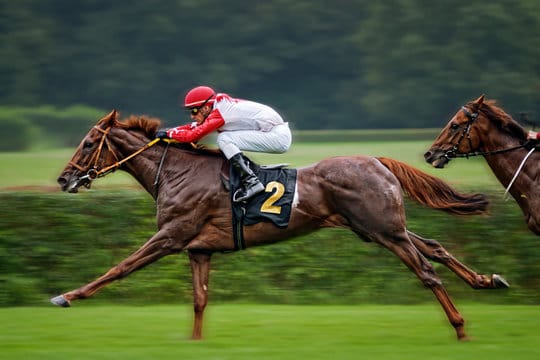
The manner in which a horse moves during workouts can also reveal a great deal about its potential. A smooth, efficient stride often translates into strong race performance, while an awkward or unbalanced gait can indicate potential physical limitations. Watching video footage of a horse’s workouts, if available, can help in assessing its stride length, fluidity, and overall movement efficiency. Horses that cover ground effortlessly without excessive energy expenditure tend to perform better in actual race conditions, making this an important element to consider when analyzing early training performances.
Recovery time between workouts is another critical aspect of evaluating potential. A horse that requires a long recovery period after a fast workout may have limitations in endurance or physical conditioning. In contrast, a horse that can deliver strong performances with minimal recovery time is likely to have superior stamina and resilience. Monitoring how quickly a horse returns to peak form after intensive training sessions can provide insights into its durability and ability to handle the demands of competitive racing.
Mental attitude and focus during workouts can also influence future performance. Some horses are naturally more competitive and thrive in a training environment, while others require more encouragement or structured conditioning to reach their full potential. Observing how a horse behaves before, during, and after workouts can provide insight into its racing mentality. A horse that remains calm and focused is often better suited to handling the pressures of competition, whereas one that appears overly anxious or inconsistent in training may struggle under actual race conditions.
The frequency and spacing of workouts can provide additional clues regarding a horse’s readiness for competition. Horses that train regularly with consistent improvements in their times are often well-prepared for racing. However, if a horse’s workout schedule is erratic or if it shows a significant drop in performance after a strong session, it could indicate underlying issues such as injuries or conditioning problems. Paying attention to how a horse is managed over time and whether it follows a structured training program can be helpful in assessing its long-term potential.
The presence of strong competition during workouts can also influence a horse’s development. Some horses perform better when training alongside others, while some prefer to work alone. Horses that consistently outpace their training partners in workouts may have a competitive edge, but it is also essential to consider the quality of their training companions. A horse that easily dominates weaker training partners may not necessarily translate that advantage into actual race settings, whereas a horse that performs well against strong competition in workouts may be a better indicator of future success.
Early workout data is particularly useful in identifying horses that may be undervalued before making a name for themselves. Many promising horses do not immediately stand out in their first races but show signs of development through their training sessions. By closely analyzing workout progression, movement efficiency, and response to increased training intensity, it is possible to spot emerging talent before it gains widespread recognition. This makes early workout data a valuable tool in predicting future success and identifying high-potential horses before they become established stars.
Technology has further enhanced the ability to analyze early workout performances. With the availability of advanced tracking systems and biometric data, it is now possible to assess factors such as stride length, acceleration patterns, and heart rate recovery with greater accuracy. These tools provide deeper insights into a horse’s physical capabilities and can help in making more precise evaluations of its potential. Horses that demonstrate optimal biometric indicators in training often have a significant advantage when they transition to competitive racing.
Ultimately, while early workout data can provide a wealth of valuable information, it should always be considered alongside other factors such as pedigree, trainer reputation, and race-day performance. No single metric can fully determine a horse’s potential, but by carefully analyzing multiple aspects of its early development, it becomes possible to identify those with the characteristics necessary for long-term success. Consistency, adaptability, endurance, and mental toughness all play key roles in shaping a horse’s future, and those who take the time to study these factors through early workout data will be best positioned to recognize true talent before it fully emerges.
The Function of Resting Heart Rate in Forecasting Performance in Horse Racing
The role of physiological metrics in assessing and predicting athletic performance has gained increasing attention in recent years, and in horse racing, one of the most significant indicators is resting heart rate. A horse’s cardiovascular system plays a crucial role in its ability to perform at an optimal level, and resting heart rate serves as a baseline measure that can offer valuable insights into an individual horse’s fitness, conditioning, and overall potential. By understanding how this physiological marker functions in relation to performance, trainers, veterinarians, and owners can develop more precise conditioning programs and make informed decisions about race readiness. Betting tips based on such physiological data can also provide valuable insights for those looking to assess a horse’s potential before placing a wager.
Resting heart rate, which refers to the number of heartbeats per minute when a horse is at complete rest, is an essential component of cardiovascular health and efficiency. This value is influenced by factors such as genetics, training, recovery, and general health status. Typically, horses with lower resting heart rates exhibit superior cardiovascular efficiency, which translates to greater endurance, quicker recovery times, and an overall advantage in high-intensity exertion. This principle is similar to what is observed in elite human athletes, where those with lower resting heart rates often demonstrate superior aerobic capacity and improved stamina. In equine physiology, a resting heart rate of around 30 to 40 beats per minute is considered normal, but variations within this range can indicate differences in fitness levels.
A well-conditioned horse with a consistently low resting heart rate tends to have a heart that pumps blood more effectively, delivering oxygen and nutrients to muscles with less effort. This efficiency enables the horse to sustain high speeds over extended distances with reduced cardiovascular strain. Additionally, the ability of a horse’s heart to return to its resting rate quickly after exercise is another sign of superior conditioning. Horses that experience prolonged elevated heart rates following exertion may struggle with endurance and may be more prone to fatigue during competition. By closely monitoring these fluctuations, trainers can gauge whether a horse is in peak condition or whether adjustments are necessary in their training regimen.
The significance of resting heart rate extends beyond just cardiovascular efficiency; it also serves as a critical marker of a horse’s overall health and stress levels. Stress, illness, or overtraining can lead to an elevated resting heart rate, signaling potential issues before they manifest in performance declines. Monitoring heart rate trends over time allows for early detection of health concerns that might otherwise go unnoticed until a horse begins underperforming. Subtle increases in resting heart rate can indicate underlying problems such as respiratory infections, inflammation, or muscle fatigue, all of which can negatively impact performance. By tracking these metrics consistently, trainers can make informed decisions about adjustments in workload, recovery periods, and nutrition strategies to ensure that the horse remains in optimal condition.
One of the most valuable applications of resting heart rate analysis is in determining a horse’s readiness for competition. A horse that maintains a stable and low resting heart rate leading up to a race is likely to be well-prepared for peak performance. Conversely, if there is an unexplained increase in resting heart rate, it may suggest that the horse is not fully recovered from previous exertion or is experiencing physiological stress. This information allows trainers to modify training intensity, adjust recovery protocols, or even reconsider race participation if necessary. The ability to make data-driven decisions based on heart rate monitoring enhances the likelihood of optimal race-day performance while minimizing the risk of injury or exhaustion.
Advancements in technology have made it easier than ever to track and analyze resting heart rate data in horses. Wearable heart rate monitors and smart sensors provide real-time insights, allowing for continuous monitoring without the need for invasive procedures. These devices can detect even the slightest variations in heart rate, offering valuable information about a horse’s adaptation to training and potential areas for improvement. With the integration of data analytics, patterns can be identified over time, enabling trainers to refine their conditioning programs based on objective physiological indicators rather than subjective observations alone. This shift toward data-driven decision-making is revolutionizing how performance potential is assessed and optimized in the racing industry.
While resting heart rate is a powerful predictor of performance, it is important to consider it in conjunction with other physiological and biomechanical factors. Muscle composition, stride efficiency, lactate threshold, and genetic predisposition all play a role in determining a horse’s racing capability. A comprehensive evaluation that incorporates multiple metrics provides a more complete picture of a horse’s physical readiness and potential for success. However, resting heart rate remains a fundamental starting point because of its direct correlation with cardiovascular function and recovery.
Another critical aspect of resting heart rate monitoring is its role in preventing overtraining and burnout. Horses subjected to intense training without adequate recovery periods may exhibit persistently elevated resting heart rates, which can be a warning sign of cumulative fatigue. This state of overtraining not only reduces performance capacity but also increases the risk of injuries due to muscle strain and compromised immune function. By tracking resting heart rate trends, trainers can implement structured periodization in training programs, balancing high-intensity workouts with sufficient rest to ensure long-term athletic longevity. Preventing overtraining is especially important in elite-level racing, where maintaining peak condition over multiple seasons is key to sustained success.
The influence of resting heart rate on racing strategy is another area of interest. Horses with exceptionally low resting heart rates and superior cardiovascular efficiency may be better suited for endurance-based races that require sustained effort over long distances. In contrast, those with slightly higher but stable resting heart rates may excel in shorter sprints where bursts of anaerobic power are more critical. Understanding these physiological differences enables trainers to tailor race selection and tactics according to a horse’s individual strengths. This level of strategic planning enhances the probability of achieving optimal results and ensures that each horse is competing under conditions that align with its natural capabilities.
Environmental factors can also influence resting heart rate, making it essential to account for external conditions when interpreting data. Heat, humidity, and altitude can all impact cardiovascular function, potentially causing fluctuations in resting heart rate even in well-conditioned horses. Adaptation to different climates requires careful monitoring, as a sudden change in environment can lead to increased physiological stress. Horses that consistently train in one climate may need additional time to acclimate if they are expected to compete in drastically different conditions. Understanding these variables allows for better planning and ensures that performance is not compromised due to external stressors.
In addition to its role in forecasting performance, resting heart rate data can also be used in evaluating breeding potential. Horses with superior cardiovascular efficiency are more likely to pass on genetic traits associated with endurance and stamina. Monitoring heart rate trends across generations provides valuable insights into which bloodlines produce the most athletically capable offspring. This data-driven approach to breeding enhances the selection process and increases the likelihood of developing future champions with strong cardiovascular foundations.
The practical applications of resting heart rate analysis continue to expand as technology and research progress. The growing emphasis on equine sports science is transforming how training programs are designed, moving toward more individualized approaches based on physiological data rather than traditional one-size-fits-all methodologies. As the understanding of cardiovascular efficiency deepens, resting heart rate will remain a cornerstone of equine performance assessment, guiding decision-making at every stage of a horse’s racing career.
Ultimately, resting heart rate serves as a critical physiological marker that provides valuable insights into a horse’s fitness, health, and potential for success. By incorporating systematic heart rate monitoring into training and competition planning, those involved in the industry can make more informed choices that optimize performance while prioritizing equine welfare. The ability to forecast racing outcomes through objective cardiovascular data represents a significant advancement, reinforcing the importance of science-driven methodologies in developing the next generation of elite racing horses.